Filler Words and Listener Perceptions of Speaker Intelligence
Listeners punish filler words far more harshly than the science justifies.
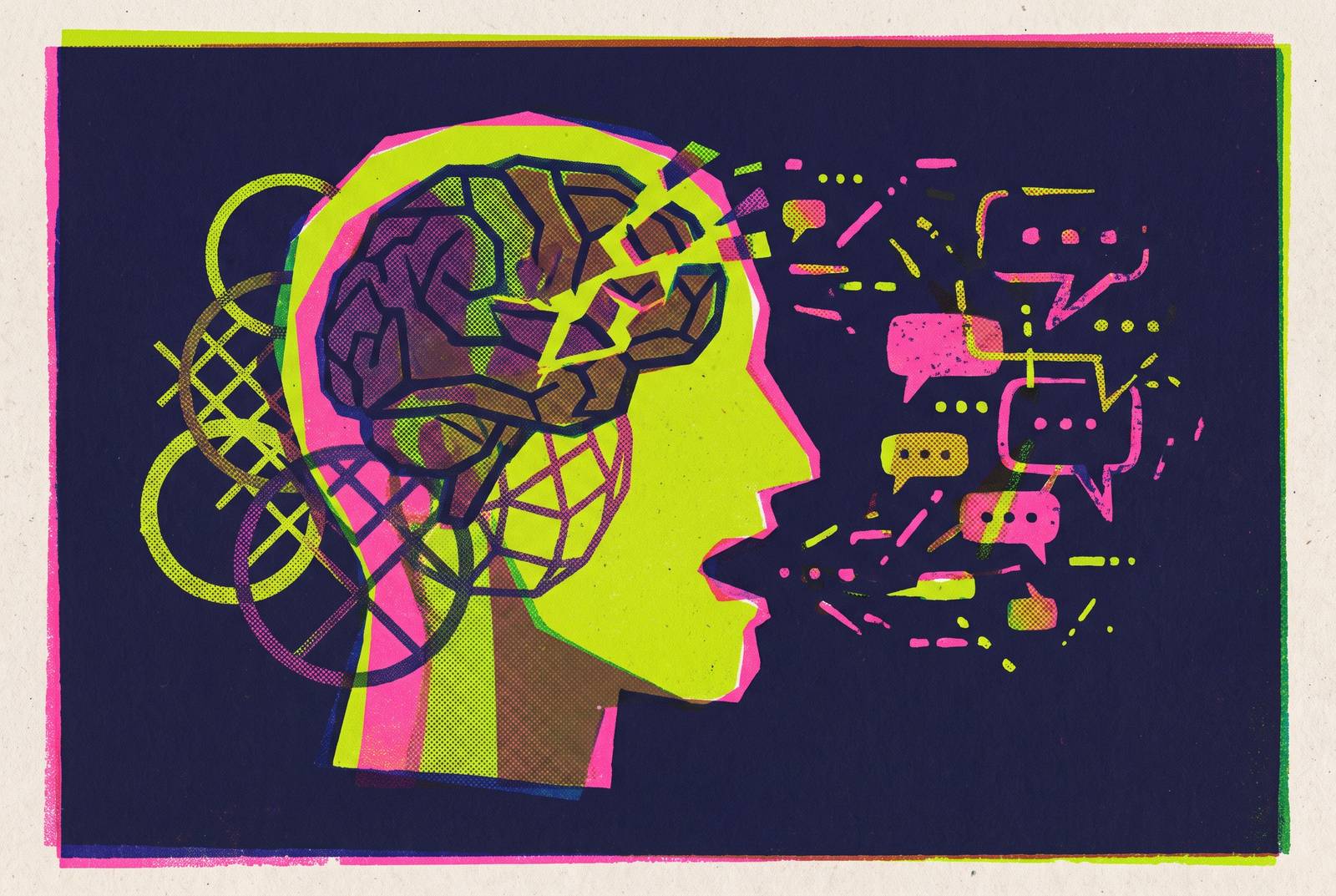
Filler words get punished by listeners far more than the science behind them would ever justify. The gap between what an "um" actually signals and what a listener assumes it means is the subject of this piece, and closing that gap is the fastest route to sounding sharper without changing a single idea in your head.
Why filler words carry a perception penalty that their cognitive function doesn't fully deserve
A listener hears "um" and makes a snap judgment: this person is unprepared, nervous, maybe not that sharp. That judgment happens in under a second, long before the sentence finishes, and it happens almost automatically. The trouble is that the judgment and the reality rarely match. Fillers appear across nearly every spoken context, produced by confident speakers and nervous ones, experts and novices alike, because they are a structural feature of talking in real time rather than a mark of some speakers being worse at it. Research on conversational agents found that filler-using speakers were rated as less intelligent and less likable in task-oriented conversations, and that penalty is measurable and consistent in contexts where real stakes ride on the verdict: interviews, pitches, presentations. What makes the penalty worth questioning is its asymmetry. The same behavior that tanks a candidate in a structured interview can make a dinner-party conversation feel warmer and more human. The real question is why a listener's brain treats the identical sound so differently depending on the room it's spoken in, and what a speaker can actually do about it.
What the brain is doing when it reaches for "um
Speaking out loud asks the brain to do several jobs at once: pick the right word, arrange it in a grammatical sequence, plan the next few words behind it, track what's already been said, and read the listener's face for signs of confusion or boredom. All of that happens in fractions of a second, continuously, for as long as the sentence runs. A filler is what happens when that pipeline hits friction. A filler is the sound of the gears catching for a beat while the brain finds the next part it needs.
Brain imaging backs this up at the mechanical level: regions tied to complex thought, the association cortex, show more activity during filler production than during ordinary word production. That is the opposite of what the stereotype predicts. If fillers were pure laziness, you'd expect the brain to be doing less in that moment, not more. Instead, a speaker reaching for "um" is often mid-calculation, not checked out.
The clearest demonstration of this comes from research on bilingual speakers under cognitive fatigue. After navigating a lexically complex word, bilingual speakers tend to follow it with a disfluency and then a simpler word, a pattern researchers describe as a kind of reset after heavy lexical lifting. The disfluency is the brain buying itself a half-second to recover momentum after a hard retrieval. Less confident speakers do show more disfluency overall, and filled pauses track the difficulty a speaker is experiencing at that exact moment. Filler frequency works like a readout of processing load, moment to moment, rather than a fixed trait stamped on a person.
The same cognitive machinery producing the "um" is also producing whatever comes right after it, making the filler and the good sentence that follows two steps in the same process.
How the form and position of a filler change what listeners hear
Not every filler lands the same way, and the differences shift how listeners judge fluency. Research published in the VNU Journal of Foreign Studies found that both the form of a filler and its position in a sentence affect how listeners judge fluency, and form carries more weight than position does. In practice, that means swapping which filler you use changes the verdict more than where in the sentence you happen to drop it.
Consider two speakers in a boardroom. One says "uh" while collecting a thought. The other says "like" in the same spot. The content is identical, the pause is the same length, and yet listeners in many professional settings will judge the second speaker more harshly, because "like" and "you know" carry heavier social baggage than "um" or "uh." They read as generational signals as much as speech patterns, and they can trigger judgments about professionalism that have nothing to do with the sentence's actual clarity.
That penalty appears in research on English as a Lingua Franca presentation settings, where 204 subjects, including language instructors, toastmaster members, and university students, evaluated filler use in oral presentations. Most of them viewed fillers as a drag on communicative competence. But fillers are not pure noise even there. They hold a turn while a speaker finishes a thought, mark a shift from one topic to the next, and cue a listener that more is coming. Those are real jobs a filler performs in conversation. They just don't buy the speaker any goodwill from an audience grading on first impressions.
The practical upshot is almost absurdly simple: a speaker who trades "like" for "uh" in a formal setting has shifted listener perception without touching a single idea in the pitch. Same brain, same content, same cognitive load, different verdict. That's close to the cheapest win available in professional speech.
Where the intelligence penalty hits hardest (and where it nearly disappears)
The penalty for fillers is not a flat tax applied everywhere equally. It concentrates hard in evaluative, task-oriented settings and loosens considerably in social ones, and that single fact is probably the most useful thing a speaker can learn from all this research. Context, not filler count, is the variable doing most of the work.
In the conversational-agent research, the same filler-using agents rated lower on intelligence and likability in task-oriented exchanges were rated more entertaining in social ones. Same behavior, opposite verdict, depending entirely on what the listener walked in expecting to evaluate. Job interviews sit firmly on the harsh end of that spectrum. Automated analysis of interview performance finds that candidates who speak more fluently, with fewer fillers, get rated as stronger candidates, even when their answers contain the exact same content as a filler-heavy counterpart. The words didn't change. The packaging did, and the packaging moved the score.
And yet a genuinely interesting counterpoint comes from inside the interviewing profession itself. Barry Drexler, who has conducted more than 10,000 interviews at firms including Lehman Brothers and Lloyds Bank Group, argues the opposite of the dominant finding: that a few fillers make a candidate sound less rehearsed and more like an actual person. Drexler isn't a theorist guessing from a lab. He's someone who has sat across the table ten thousand times and formed a view from the pattern of who got hired and who didn't. Maybe both things are true at once. A conversational interview, where an interviewer is reading for warmth and authenticity, rewards a bit of rough edge. A structured panel interview or a formal pitch, where an evaluator is reading for authority and command of material, punishes it. The format of the evaluation seems to decide which read applies. The same "um" that humanizes a candidate in one room can quietly sink them in the next.
Scientific and research communication pushes the stakes even higher. The MIT Biological Engineering Communication Lab states that the gap between an audience counting a presenter's "umms" and an audience actually understanding, or funding, the research comes down to delivery. In a room where money or publication is on the line, fluency is the thing standing between a good idea and a good idea nobody backs.
Why Gen Z's filler-heavy speech is both linguistically legitimate and professionally costly
For a lot of younger speakers, "like," "literally," and "you know" are tools, doing real social work: softening a claim, signaling closeness, managing how blunt or tentative a statement sounds. Linguist Rob Drummond, who studies spoken language and identity, argues that "like" in particular has been badly misread for decades. It shapes meaning, manages tone, and tracks shifting social dynamics. None of that is laziness, and none of it signals low intelligence, whatever the stereotype insists.
That argument holds up linguistically, and it deserves to be taken seriously rather than treated as a disclaimer before the "but" arrives. The complication is that hiring managers, panel interviewers, and conference judges mostly have not caught up to the linguistics. They are still scoring against an older, narrower standard of what fluent, authoritative speech sounds like, and that standard has not moved just because the research has. So a real gap opens up: linguistically sound speech patterns running straight into evaluation criteria that haven't updated to recognize them.
That gap is not a flaw to fix by stripping out every "like" and talking like a courtroom transcript. Treat it instead as a register problem, the way a musician reads a room and chooses an acoustic set over a plugged-in one. A speaker who already has a flexible, socially fluent way of talking has most of the hard work done. What's missing is a second register, a formal mode that can be switched on for interviews, pitches, and presentations, and switched back off the moment the stakes drop. The speakers who build that second gear end up with an edge over people who only ever learned the one. They can read a room and move between registers instead of being stuck broadcasting on a single frequency regardless of who's listening.
The deliberate pause as the highest-leverage replacement for a filler
Replace the filler with nothing. Silence. A real pause.
It sounds almost too simple to matter, and that's why it works. A pause communicates zero content on its own, literally nothing, and yet speech that uses deliberate pauses instead of fillers reads as more confident and more in command of the material. The mechanism is about what the silence doesn't say: a filler signals, however faintly, that the speaker is scrambling. A pause signals the opposite, that the speaker is choosing their next words on purpose, taking their time because they can afford to.
Pauses also do work fillers only pretend to do. They give an audience a half-second to actually absorb the sentence that just landed instead of being dragged straight into the next one. They put a frame around whatever comes right after, so the next sentence lands with more weight than it would if it arrived in the same unbroken stream. Professional speakers use this constantly and deliberately: a pause before a key number, a pause after a punchline, a pause right before the ask in a pitch. It's a rhetorical choice doing the job a filler only fakes.
There's a prosody angle too. Listeners pick up on vocal patterns, not just word choice, when they judge whether a speaker sounds certain or honest. A well-placed pause carries its own acoustic signature, distinct from a rushed "um" jammed into the same gap, and listeners read that signature as composure. The fix here is trading a sound that leaks uncertainty for a silence that reads as control, in the exact same half-second where the old filler used to sit.
How daily recorded practice closes the gap between cognitive load and verbal control
What feels like a filler habit is mostly a word-retrieval process running under time pressure, and that process responds to training the same way a muscle responds to reps. Reading about communication doesn't move the needle much, because the skill lives in retrieving words on demand under pressure, not in understanding the theory behind why that's hard. The fix has to involve actually talking, out loud, on the clock, repeatedly.
A run's length shifts how clearly it reads to listeners. Clarity scores peak on practice runs between 20 and 59 seconds and drop once a run stretches past a minute. Five short 50-second attempts at the same answer teach more than one long, unreviewed rehearsal that nobody listens back to. Short reps force a speaker to hit the point directly instead of wandering, and the repetition across five attempts gives the brain five separate chances to find a cleaner route to the same idea.
None of this requires exotic tools to start noticing it. Microsoft's Speaker Coach, built into PowerPoint, tracks filler words automatically for anyone giving a slide presentation, which says something on its own: measurable feedback on filler use has become a normal, everyday feature rather than something only expensive coaching used to offer. The bar for getting real data on your own speech patterns has dropped to nearly zero.
What actually produces the improvement is the friction of being caught off guard, daily, on purpose. A fresh, slightly unfamiliar prompt each day forces the brain to search for words under real conditions instead of reciting something memorized, and that's precisely the condition that trains faster retrieval. Do that enough times and the skill stops living only in formal presentations. Speakers who train this kind of control under pressure tend to listen better and think more clearly in conversations that have nothing to do with public speaking at all, because the underlying skill, finding the right word fast under pressure, is the same skill in a meeting, an interview, or an argument with a friend.
None of this is about talent. It's a gap between how a voice currently sounds under pressure and how it could sound with a few weeks of short, deliberate reps, and that kind of gap closes with practice far more reliably than most people expect.
Sources
- Frontiers
- INVESTIGATING THE EFFECTS OF FILLERS IN SPONTANEOUS SPEECH ON FLUENCY PERCEPTION
- Language, Education, and Development (LEAD) Journal ISSN: 2827-976X
- Exploring Effects of Conversational Fillers on User Perception of Conversational Agents
- Publisher Correction: Listeners’ perceptions of the certainty and honesty of a speaker are associated with a common prosodic signature
- Bilingual Speakers Exhibit Cognitive Fatigue: A Speech Disfluencies Case