How Speaking Rate Affects Listener Comprehension and Engagement
Varying your pace intentionally improves how listeners understand and retain your message.
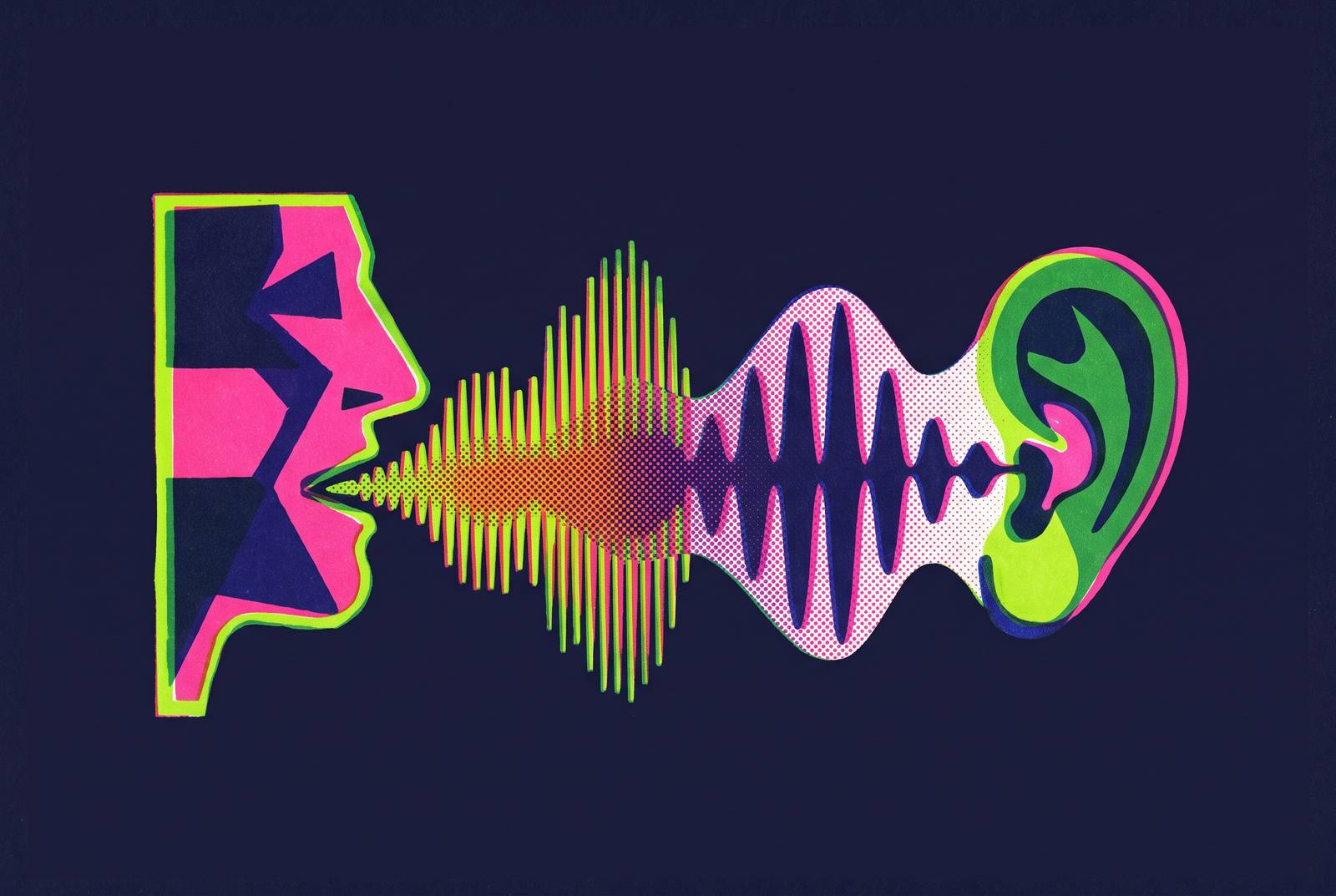
Speaking rate affects how well listeners understand a message and how long they stay engaged with it. Yet better delivery is not simply a matter of slowing down or finding an ideal words-per-minute target. The useful skill is deliberate variation, grounded in an understanding of what listeners need time to process and what helps them keep following.
Why speaking rate is worth treating as a variable, not a background detail
Speaking rate is often treated as a byproduct of nerves or personality, as though being a fast talker were as fixed as height. Rate is the number of words or syllables produced per minute, which gives it a measurable unit. A speaker can track that measure, practise changing it, and compare one session with the next. What seems like a personal trait can therefore become a trainable skill.
That distinction matters because a message has to arrive at a pace the listener can use. Clear wording does not remove the work of following speech as it unfolds, and strong content does not automatically hold attention. Rate shapes the conditions under which that content is understood, retained, and heard through to the end. Unlike a general instruction to sound more confident, a pacing goal gives a speaker something concrete to adjust.
What happens in the brain when speech comes in too fast or too slow
The first reason pace matters is that speech sounds themselves change as delivery speeds up. Ting and Kang’s 2023 study in Language and Speech details how rising rate shortens voice onset time in English. This is the durational gap between a stop consonant’s release and vocal cord vibration. As that gap shortens, voiced and voiceless sounds can overlap, leaving listeners to decode less distinct cues under greater time pressure.
Listeners cope through rate normalization, changing how they hear speech sounds as they go to fit the surrounding context and the pace the speaker has set. The brain recalibrates as speech unfolds, using the timing around a sound to help interpret that sound. This capacity explains why listeners can accommodate different speakers. But compensation is still work, and delivery that makes that work harder can carry a comprehension cost.
A study in the Journal of the Acoustical Society of America found that both fast and slow speech can increase listening effort and impair comprehension in young listeners. Speech that is too slow can also leave attention underoccupied, allowing the mind to wander without producing a gain in understanding.
What the research actually says about comprehension-friendly rates — and where it gets complicated
These mechanisms make the idea of a comprehension-friendly zone appealing. There should be room to decode the sounds without so much spare time that attention drifts. Yet a useful zone is not the same as a universal numerical prescription, and the research does not justify treating one words-per-minute figure as the answer for every audience. The evidence becomes more informative when comprehension and preference are kept separate. A pace people like need not be the pace at which they understand more.
A September 2025 study in Language & Communication looked at speech rate in Catalan Easy Language and found no significant effect on oral comprehension in any of the listener groups. Those groups included people with intellectual disabilities and second-language learners, and all groups adapted well to varied rates. The most accepted rate was 150 wpm, and acceptability generally reflected listener preference.
Ting and Kang (2024) add another caution against simple predictions from pace. They found no conclusive evidence that listeners’ responses differed systematically with a speaker’s habitual speech rate when tracking durational contrasts in dialogue. This leaves room for the possibility that listeners’ adjustments buffer some straightforward rate effects, without proving that habitual pace never matters.
Research published in the Journal of Speech, Language, and Hearing Research also examines how sentence context interacts with speaking rate in comprehension and recognition memory of degraded speech. Content complexity, audience familiarity, and contextual cues all complicate a simple target. A words-per-minute average can describe delivery, but it cannot fully describe the demands a passage places on its audience. The practical consequence is to develop control over changes in pace, rather than pursue numerical consistency as an end in itself.
How skilled speakers use rate variation — not a fixed pace — to hold attention and signal meaning
Variation turns rate from a measure of speed into a way of organizing meaning. Skilled speakers speed up to show energy and enthusiasm, slow down for important points, and pause to let a point settle. Each change gives the listener information about how to hear what comes next or what has just been said. A slowdown says “this matters,” while a measured build creates suspense.
A pause is especially useful because it creates emphasis without adding more sound. After a key statement, silence gives the listener time to absorb it and distinguishes it from the surrounding speech. Speaking more loudly cannot give listeners that time to take in the point. Changing pace on purpose also shapes how a speaker comes across, since speaking too fast can make them seem nervous or unprepared. Well-placed pauses can instead project control and self-assurance, even though that perception is separate from the quality of the content.
In conversation, rate does more than signal intent because speakers also adjust to one another. Rate entrainment is the convergence of conversational partners’ speech rates. Wynn’s 2023 study in the Journal of Speech, Language, and Hearing Research found that people with stronger rhythm perception showed greater rate entrainment to unfamiliar partners. That entrainment mediated improved conversational quality.
This mutual adjustment is not necessarily equal. Schultz et al.’s 2015 entrainment study found that when participants spoke with a confederate whose pace was changed, they shifted toward that pace more than the confederate shifted toward theirs. A speaker who sets the rate can therefore have disproportionate influence over the conversational dynamic. The craft is to use that influence to support the exchange, rather than make the other person do all the adapting.
Why neural synchrony between speaker and listener is the mechanism behind real engagement
The behavioral evidence has a neurological counterpart in brain-to-brain synchrony between speaker and listener. A pilot fNIRS study published in the Journal of Speech, Language, and Hearing Research used this synchrony to assess the cognitive effort of the speaker and listener. It treats the two sides of communication as coupled rather than independent, giving engagement a measurable neural correlate. Related findings link more fluent native-to-native speech with greater interbrain synchronization across several regions that handle linguistic and executive functions. Less fluent accented speech is linked to weaker coupling found only in higher-order cognitive regions.
These findings make delivery consequential without turning synchrony into a simple score for speaking well. Evidence about fluency does not by itself identify an ideal pace or prove that a particular pause will produce stronger coupling. It does show that following speech takes coordinated activity as well as a listener’s choice to pay attention. Pace is one input into that coordination, and either overload or under-stimulation can make the signal harder to track. When comprehension falters, the difficulty may lie in the processing demands of the delivery.
How to develop rate awareness as a trainable skill through deliberate, measurable practice
A person’s sense of speaking quickly or slowly is not the same as a record of what they did. Speakers can record themselves and listen back to hear what they did, while tools that work out average words per minute give them a starting measure. Intentional pacing goals then turn listening back into a repeatable practice. As with a skill in sport, speakers gain from trying again with clear feedback on each attempt.
One number cannot show whether a speaker slowed down for an important point, rushed through a hard passage, or left time after a key idea. Self-review therefore has to connect the measured rate with the role that pacing played in the message. Self-review should assess whether changes in speed supported meaning, energy, and absorption. Otherwise, the measure may reward a steady pace even as the speaker is learning to vary it on purpose.
AI-driven feedback tools can add objective data on pacing, vocal variety, and delivery to that review. Their practical value is the shorter gap between an attempt and a correction, so that practice can become a tighter feedback loop. Quick feedback can help speakers make gains they can measure over weeks rather than months, but they still need to use the data to work toward a clear pacing goal. A score can identify something to work on without becoming the purpose of the exercise.
Daily short-form practice is more effective for developing this awareness than occasional long-form preparation. Speaking in response to a single prompt and getting scored feedback puts rate control under mild pressure, so speakers practise the habit in conditions closer to real delivery than rehearsing silently. Repetition then helps make monitoring pace part of speaking. That is the useful endpoint of measurement and practice. Rate awareness gives speakers the ability to adjust the time they offer listeners, so that the message remains something an audience can follow.
Sources
- The Effect of Habitual Speech Rate on Speaker-Specific Processing in English Stop Voicing Perception - Connie Ting, Yoonjung Kang, 2024
- The effect of speech rate on easy language audios comprehension - ScienceDirect
- (PDF) Speech rate perception in audios in Easy Language amongst individuals with intellectual disabilities
- Effect of Speaking Rate and Sentence Context on Comprehension and Recognition Memory of Degraded Speech
- Both fast and slow speech can increase listening effort and impair speech comprehension in young listeners
- Evaluating Speaker–Listener Cognitive Effort in Speech Communication Through Brain-to-Brain Synchrony: A Pilot Functional Near-Infrared Spectroscopy Investigation