Replacing the Mirror and the Friend With a Scoring Engine That Has No Social Agenda
AI removes the social barriers that make human feedback on speaking unreliable.
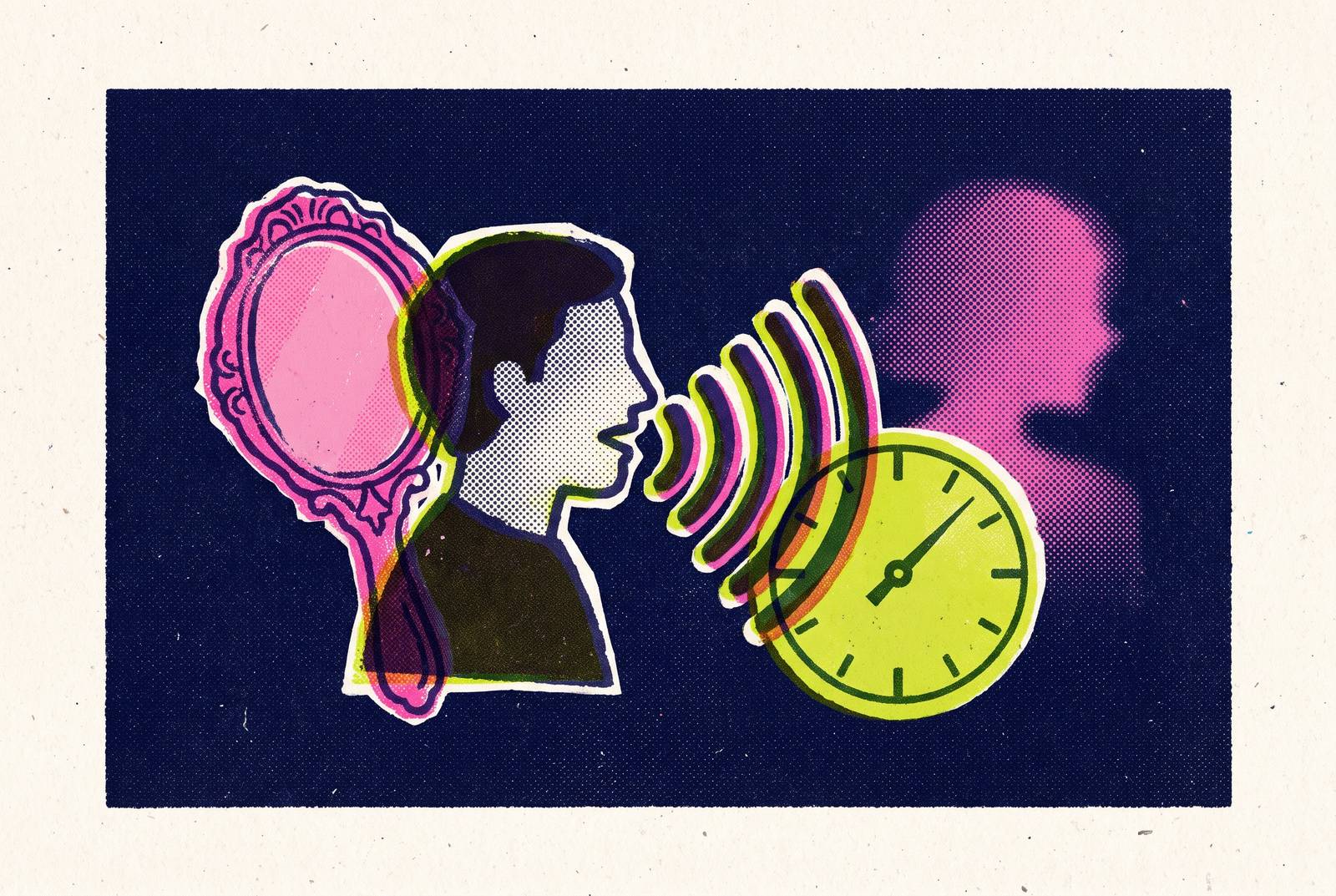
AI speech scoring and feedback for everyday practice can judge specific speaking behaviors in a consistent way that a mirror or a supportive friend cannot reliably match. Its value is not superior social judgment but the absence of a relationship to protect. Used as an instrument rather than an oracle, a scoring engine makes honest repetition possible before a real conversation puts opportunity, credibility, or confidence at stake.
Why every person you ask to rate your speaking has a reason to lie
A friend watches a practice presentation and nods. At the end comes the verdict, “that was great”. Perhaps it was, but the nodding has another job besides evaluating delivery. It keeps both people at ease and protects the friendship. The speaker asked for an assessment and received a small act of diplomacy.
That conflict exists before the presentation begins. A manager saying “good effort” may be avoiding a difficult conversation, while a classmate knows the roles will soon reverse and the person being assessed will become the assessor. A favorable verdict cannot, by itself, distinguish a good performance from a well-protected relationship.
When speakers watch a recording or read a transcript, their own hopes, embarrassment, and choice of what to notice take the place of someone else’s concerns about the relationship. The mirror flatters or horrifies, but neither reaction is a measurement. Even staged feedback exercises can sidestep the emotional pressure that makes an actual assessment difficult. The central obstacle is therefore not a shortage of people willing to listen, but a shortage of listening that produces a dependable signal.
How politeness norms and relationship dynamics make consistent human evaluation impossible
Mentors and coaches often soften feedback because they genuinely want the speaker to improve. That intention is part of the difficulty. Criticism can invite defensiveness, rationalization, or withdrawal, so a considerate evaluator adjusts the message to keep the recipient engaged. The evaluator must also manage what hearing the description will do to the relationship.
Language already changes with its social setting, a shift known as register. Feedback follows the same pattern. A mentor’s private assessment belongs to a relationship in which encouragement, trust, and authority all have a role. Asking for “honest feedback” adds a request for bluntness to an encounter still governed by social expectations.
This helps explain why students in public speaking courses have described peer feedback as biased, value-laden, and dependent on who gives it. The same speech can receive different scores for reasons unrelated to its delivery. Such variation reflects the competing purposes of human evaluation, which include preserving confidence and avoiding conflict as well as identifying weaknesses. The most available feedback is often compromised by precisely the relationship that makes it available.
Why verbal communication is the skill most damaged by this feedback gap
Speaking makes this inconsistency especially costly because delivery happens while the speaker is occupied with producing it. The speaker must think of what comes next, choose words, and keep going. That leaves little room to judge pace or pauses well as they happen. Intention and execution can diverge without an obvious warning. Feeling clear is not the same as sounding clear.
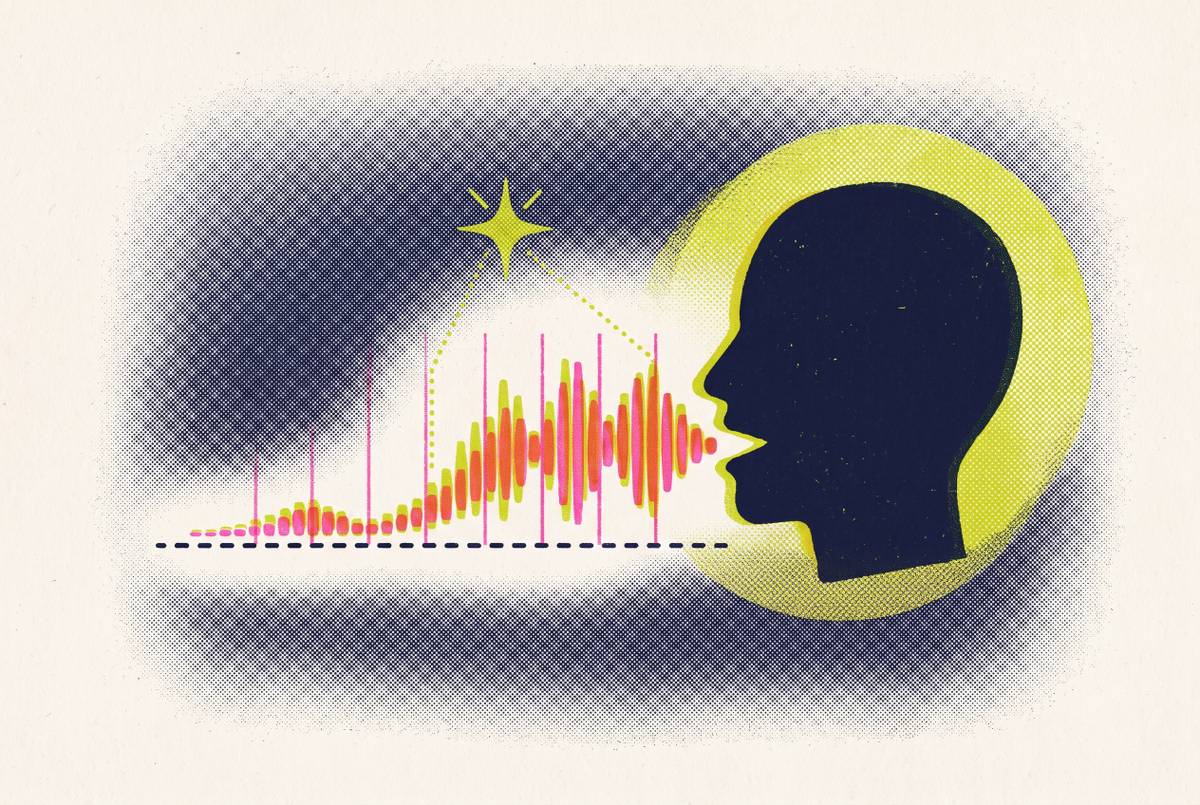
A recording lets a speaker listen again, but it gives them no yardstick on its own. Oral fluency has measurable features, including speech rate, pause frequency, mean length of utterance, and articulation rate. Mean Length of Run (MLR) and Articulation Rate (AR) serve as indicators of fluency and delivery speed. These variables describe behavior rather than the speaker’s impression of that behavior.
The distinction changes what improvement requires. Verbal fluency is a behavioral skill, so understanding advice is not equivalent to being able to execute it under pressure. Repetition needs a signal that connects an attempt with what actually happened. Without that connection, a speaker may know the principles of clear delivery yet continue practicing the same habits. The feedback gap is especially acute here because the performance moves forward faster than the speaker can inspect it, and the people available to inspect it have their own reasons to be gentle.
The generational moment that makes this feedback vacuum urgent
Gen Z has spent formative years communicating through texting, posting, and DMing. That is extensive practice in particular registers. A professional discussion or an academic presentation asks for a different kind of performance. Being constantly in contact can coexist with having little reliable guidance on how a high-stakes spoken answer lands.
The pandemic and remote work widened that gap by disrupting informal exposure to professional speech. In casual hallway conversations and in-person meetings, people learn what is expected of them without a formal lesson. Losing those encounters during formative years gave people fewer chances to hear, try, and get used to unfamiliar spoken registers. The missing practice was not simply another scheduled presentation.
Employer concerns about recent graduates’ communication skills make this gap urgent, but they do not justify a verdict about generational character. The feedback supplied by the available environment deserves scrutiny. Frequent contact through digital channels, fewer chances to hear workplace speech, and polite feedback on delivery fall short of a training loop people can trust.
What the stakes actually are when verbal skill goes undeveloped
Distorted feedback does more than delay improvement. It can encourage repetition of the very behavior that needs to change. If an unclear answer receives reassurance, the speaker has little reason to revise it before the next attempt. Repetition then works in the wrong direction. Over time, the cost is not just an awkward presentation but a practiced habit that appears when the stakes rise.
An interview makes the consequence concrete. A candidate may understand the work yet struggle to give a clear account of that understanding. In that situation, the interviewer encounters the delivery through which the candidate tries to explain that understanding. A pitch creates a similar problem when a worthwhile idea arrives through an account that is difficult to follow. Neither example implies that verbal polish should outweigh substance, only that listeners need access to the substance before they can judge it.
Communication is therefore a skill with economic value, especially when results depend on how well people influence others, present, and lead discussions. Technical credentials do not remove that dependence. The burden also falls unevenly because formal coaching, speech training, and well-connected networks are not equally available. A person limited to friendly reassurance has fewer ways to discover what needs work. Tolerating unreliable feedback is therefore not a neutral choice, especially for speakers whose next interview or pitch offers little room for a second attempt.
How can a scoring engine give honest feedback on presentation delivery?
A scoring engine improves on social feedback by removing a particular conflict of interest. It has no friendship to preserve, no discomfort about delivering criticism, and no expectation of being graded in return. Mechanical assessment separates the attempt from the social negotiation surrounding it. That separation makes consistent feedback possible.
AI assessment can address tone of voice, clarity of message, structure, assertiveness, and pacing, while measurable fluency markers provide a more specific basis for tracking delivery. An engine can follow the same variables across hundreds of sessions and return feedback within seconds. The speaker can connect that signal to an attempt still present in working memory, rather than interpret a vague impression hours or days later.
The MySpeaker Rhetorich study in Finland found that students in a public speaking course regarded AI-powered feedback as advantageous and less biased than peer feedback. Amber S. Barger’s research also found that working alliance was at similar moderately high levels with a simulated AI coach and a human coach. That finding concerns a developmental partnership. It nevertheless challenges the assumption that mechanical feedback must feel alienating.
The real limitation of scoring engines and how to think about it honestly
Having no relationship to protect is not the same as having no bias. A scoring engine can inherit subjective norms from its training data and present them with the authority of measurement. This is the strongest objection to the model. A friend’s preferences may be visible through familiarity, while an engine’s preferences can remain hidden behind proprietary algorithms and unknown data.
Research in applied linguistics has found that some speech scoring systems give speakers from marginalized groups lower scores in a systematic way. Generic recommendations can also miss the goals, audience, or format of a particular speech. Over-standardized feedback risks treating an authentic speaking style as an error to correct.
The practical response is to understand what the engine measures and choose instruments transparent about their criteria. A score should be a signal about specific, named behaviors rather than a verdict on overall communication quality. Consistency is useful only when the reader understands what is being held consistent. Feedback on pacing cannot tell whether a message fits a given audience, and delivery metrics cannot take the place of reading a room.
What daily agenda-free scoring actually builds over time
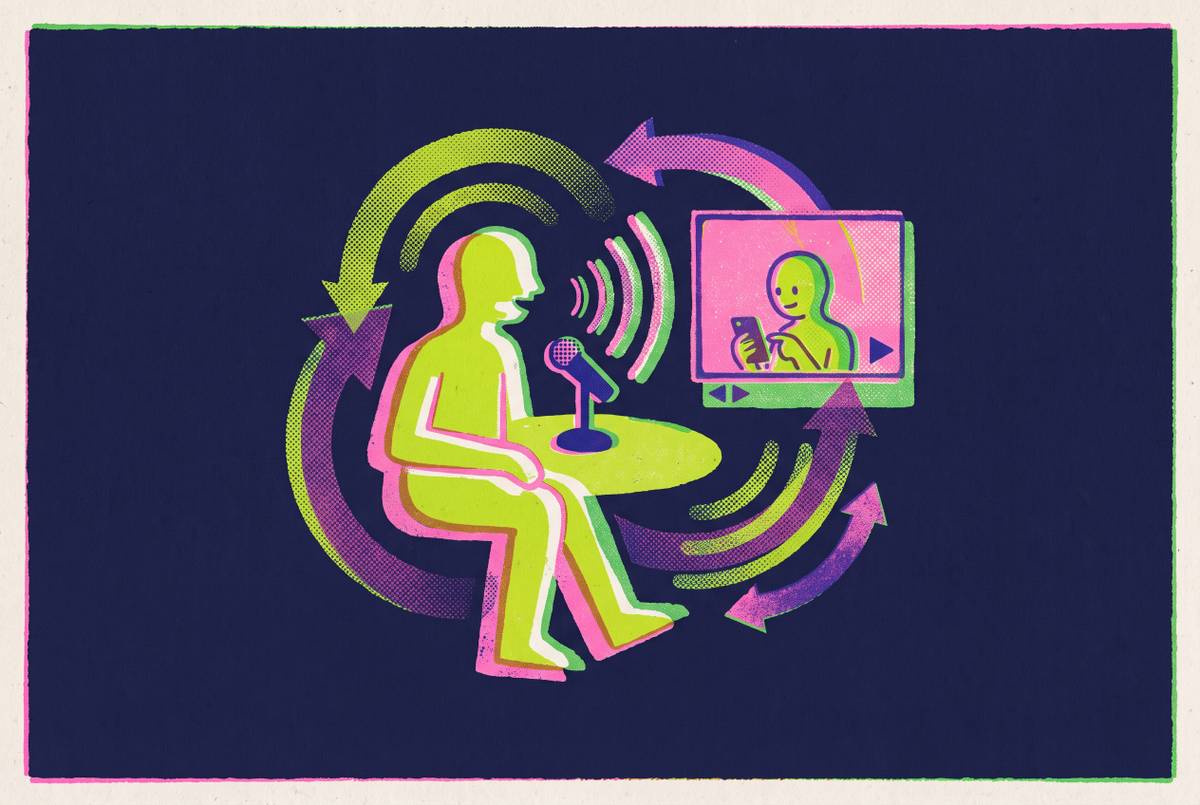
Daily scoring changes the conditions of practice as well as its frequency. A speaker who trusts the instrument does not have to recruit an audience, negotiate another favor, or protect a relationship during every attempt. That reduces the social cost of repetition. It also creates room to attempt harder material and tolerate a less successful performance.
Short-form daily practice provides more behavioral repetitions than occasional long-form preparation. With a tight feedback loop, changes in speech rate, pause frequency, and mean length of utterance can become trackable. The score is useful because it connects successive attempts. Confidence can then rest on evidence of changed delivery. Reassurance can soothe a speaker, but a record of progress gives them another reason to take a risk when they speak.
The evidence still needs careful boundaries. Passmore, Tee, and Rutschmann’s 2025 study found that an AI agent performed at an ACC level across key coaching competencies when assessed against ICF markers. It did not measure client outcomes such as goal clarity, self-awareness, or action commitment, so those gains cannot be claimed from that study. The defensible case for daily scoring rests on consistent behavioral feedback and the practice it enables. Its purpose is to let the speaker arrive at a human conversation having already done the repetitions, ready to attend to the person with less uncertainty about how the words are coming out.
Sources
- Gen Z in the workplace: Bridging the soft skills gap to drive success
- Exploring undergraduate students' perceptions of AI vs. human scoring and feedback
- Marked Pedagogies: Examining Linguistic Biases in Personalized Automated Writing Feedback
- Student reactions to AI versus human feedback in teamwork skills assessment
- Human-AI communication for human-human communication: Applying interpretable unsupervised anomaly detection to executive coaching