Tracking Your Speaking Baseline and Watching It Move With AI Over Weeks
AI tracks speaking habits across weeks to reveal improvement that single scores cannot.
AI speech scoring is most useful for everyday practice when it measures specific habits, records them across weeks, and uses the results to shape the next session. Honest feedback means showing changes in filler rate, pace, pauses, and response structure. Tracking your speaking baseline with AI turns a score into a starting point and a trendline into evidence that practice is working.
Why a single speaking score is an incomplete picture
A speaking score arrives, and the immediate question is whether to feel pleased or disappointed. Without context, neither reaction has much foundation. The number might describe that performance, but it cannot show whether the speaker has improved, slipped, or simply had an unusual day. It lacks a reference point against which to interpret it.
That is the problem with treating a first assessment as a verdict. Many people begin working on their speaking without a reliable record of how they sounded before, so later confidence has little evidence behind it. Feeling more comfortable is welcome, but it does not establish which habits have changed. A baseline gives those later assessments something to stand against. Its proper role is a coordinate on a map that has not yet been drawn, rather than a judgment about how good a speaker someone is.
How AI breaks spoken language into signals that can actually be measured
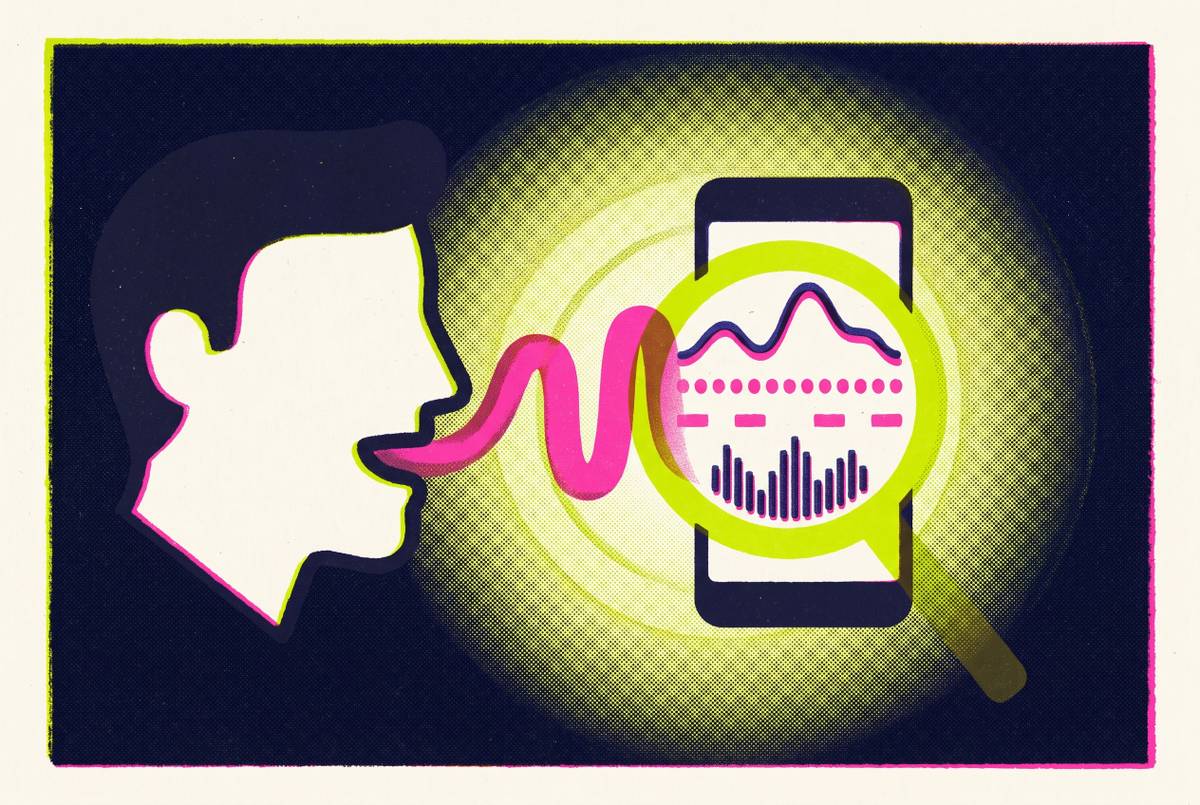
Speech may feel like one continuous performance, but it contains distinct signals that can be counted or measured. With an accurate transcript, filler frequency and words per minute can be counted, and the recording can be checked for pause length and pitch variance. These are different properties of the same delivery. A speaker can become more concise without becoming more expressive, or speak more steadily while still leaning on fillers. Tracking each of those variables on its own keeps an overall score from hiding the difference.
The numbers have an intelligible connection to listening. Low pitch variance, for example, correlates with listener disengagement, so tracking it gives a speaker a handle on the vague complaint that a delivery sounds flat. Pacing benchmarks used by AI speech coaching tools in 2026 similarly provide a reference for one part of delivery. Neither signal explains an entire performance on its own. Their value comes from making a particular habit visible enough to work on.
Shao et al. (2014) found that vocabulary size predicted the speed of a first response, with lexical access speed also predicting it for category fluency, while updating ability predicted total word output. This supports the narrower point that spoken output reflects real underlying processes. Each session can therefore produce a data fingerprint.
Why the trendline across weeks reveals what a single session cannot
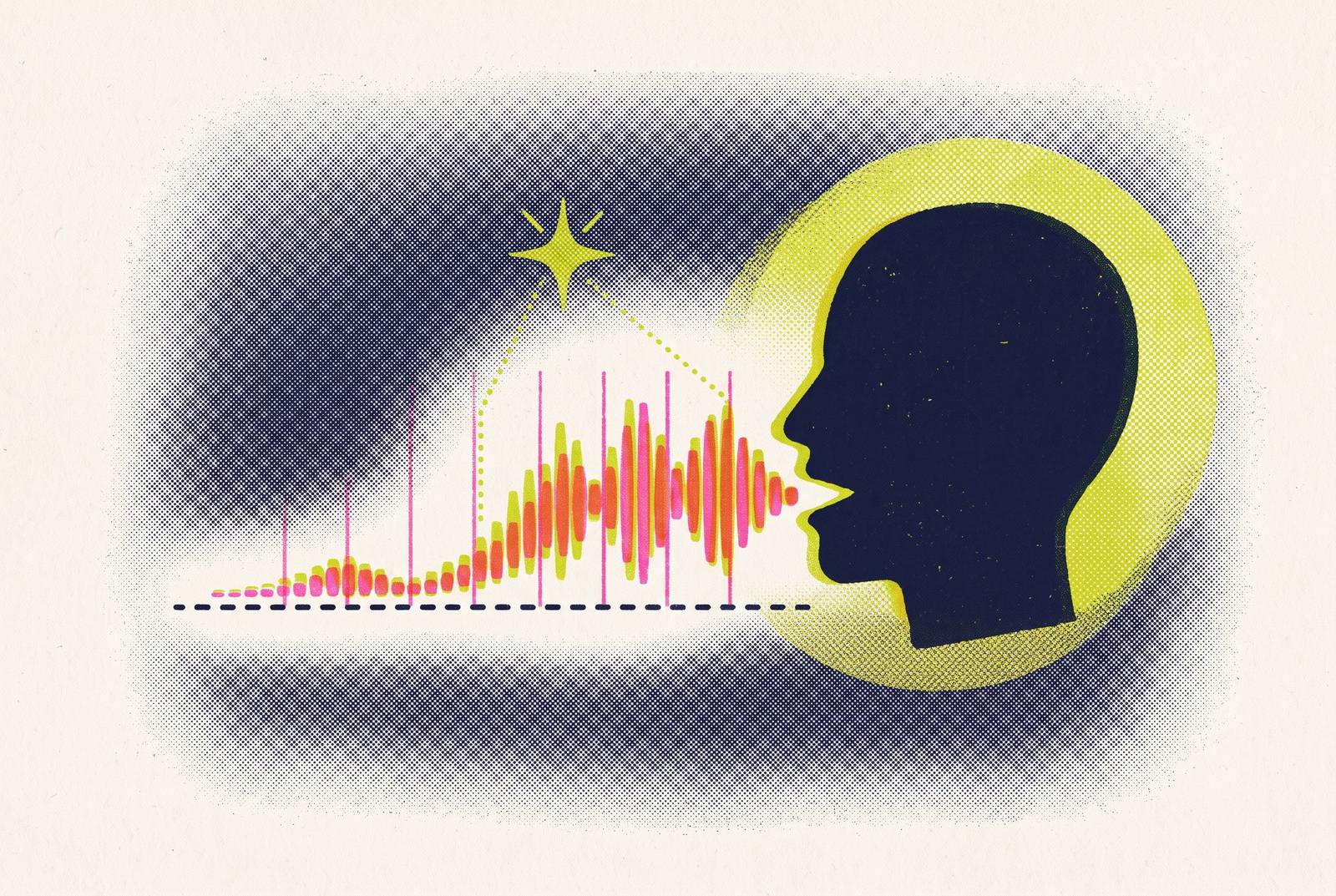
A filler rate might fall from eight per minute to five across several weeks, even though no individual attempt feels noticeably smoother. The chart preserves enough distance to make the movement visible, including gradual gains that a skilled human coach might miss between sessions.
That changes the question being asked of the data. Instead of asking whether today's delivery was good, the speaker can ask whether a habit is becoming more dependable. An early recording might show an uneven pace, while later recordings show that pace steadying across repeated attempts. One fluent performance could be an exception. When a pattern holds across several sessions, it gives stronger evidence that practice is changing the habit itself.
A signal may improve in easier sessions and regress under pressure, revealing a weakness that a single successful attempt would conceal. That distinction is useful because better practice performance is not automatically stable performance. The benchmark still supplies context, but it cannot answer the central question of whether this person's training is working. That requires comparison with the same speaker's earlier self.
Why daily short sessions produce a trendline that weekly practice cannot
The value of that comparison depends on how often a speaker produces a new data point. Over the same few weeks, weekly practice leaves a sparse record in which an unusually strong or weak performance can dominate the picture. With daily sessions, there are more chances for the pattern to show up. The distinction is not simply between a small chart and a large one, but between a record that leaves fluctuations ambiguous and one that begins to distinguish signal from noise.
Frequency also changes the training that generates the data. Spoken delivery has a motor-skill component, and deliberate repetition follows a dose-response relationship in which practice volume predicts the rate of improvement. Consistent short daily sessions outperform longer, infrequent study in skill acquisition. A weekly coaching appointment may leave only a short time for the speaker to speak. Short daily sessions give the speaker time to speak across seven days, and may take no more time in all.
The two benefits reinforce each other, but they are not identical. Repetition gives a habit more opportunities to change, while dense measurement makes those changes easier to detect. More dots alone are not proof of learning. Their usefulness depends on the deliberate practice behind them and on whether the same signals are moving consistently. Within two to four weeks, daily sessions can build a record with enough detail to show real change that the speaker could otherwise only hope was happening.
What agentic AI adds that passive dashboards and meeting-analysis tools do not
What turns yesterday's result into a better practice session today? A passive dashboard or live-meeting overlay reports what happened, but reporting is not the same as training a speaker to behave differently next time. Meeting analysis looks at a conversation that has already taken place. Structured drills between meetings create a separate opportunity to work on the habits that shaped it.
Poised provides a pointed market example of that distinction. Its live product page states that it shut down on 9 October 2026, after offering meeting analysis without a structured practice curriculum. The closure is a warning about the limits of that standalone model. It sharpens the buyer's question from whether a tool can notice weaknesses to whether it provides a path for working on them.
Agentic AI adds that next-step role to the feedback cycle. A learner can define specific goals before starting, and the system charts a customized practice path, changes focus when progress stalls, and acknowledges targets reached. Periodic progress reports also make movement legible and connect it to particular practice choices. For someone seeking honest feedback rather than generic tips, the useful distinction is whether the system only describes a performance or uses it to guide subsequent training.
The honest limit of AI tracking — what the trendline cannot show you
Filler rate, pace, concision, and answer structure respond to repetition, but they do not reproduce a skeptical room or the pressure of an unpredictable follow-up question. A cleaner delivery in practice is evidence about trained habits.
Even the measurements depend on the quality of recognition. Modern end-to-end transformer models often achieve word error rates below 5% for clear American English, but recognition can misfire on accented or dialect speech. That is a substantial limitation for speakers whose English is not General American. If the transcript is inaccurate, the feedback built on it may be misleading.
AI provides a high-volume training environment with feedback on every session and a record of micro-improvements that even experienced coaches can miss. Human coaches provide motivational and cultural nuance that AI currently cannot. Real conversations have stakes that practice cannot fully recreate. The trendline measures training fitness, so AI practice and human conversation are complementary.
Why this moment specifically — the Gen Z communication gap and the AI coaching response to it
The distinction between training and performance is especially relevant to people raised in a digital-first communication environment. Text, social media, and messaging apps allow a response to be revised, edited, or deleted before anyone receives it. Spoken conversation removes that control. A person can be articulate when given time to compose a message yet struggle when words must arrive in real time. The gap is partly about the conditions of communication.
That gap is also recognized by the people experiencing it. A large majority of Gen Z and millennials script or rehearse conversations before making a phone call, and most say poor communication skills have cost them money or opportunities. The CNBC/SurveyMonkey survey from August 2026 adds a revealing contrast. Gen Z respondents were largely confident in their own social skills, yet a majority identified active listening as the skill most lacking in young people. Confidence and awareness of shortcomings can coexist.
Generic encouragement cannot resolve that tension on its own. Nor can a delivery score stand in for an assessment of listening, which is a different part of communication. But a trendline can expose a narrower mismatch between feeling capable and having a filler rate, pace, or answer structure that has not changed in months. It gives self-awareness something concrete to work with.
Employers say communication is a concern when they hire or promote people, while colleges are under pressure to help bridge the gap. Those institutional responses are too infrequent to supply the daily repetition that builds a habit. AI gives people a way to practice between those moments. For someone who already knows that improvement is needed, the trendline provides a way to see whether effort is reaching the specific habits being trained.
How to set a baseline, read your first trendline, and know when progress is real
Record a session that captures filler rate, words per minute, pause frequency, and response structure. Look at each of those signals on its own when reading the feedback. Otherwise, an improvement in one variable can obscure a lack of movement in another, leaving the next practice decision no clearer than before. A useful baseline identifies what can change.
Treat the first two to four weeks of daily sessions as a calibration period. Early results will be noisy because becoming accustomed to recording and scoring is part of the experience. Resist treating the best session as the new normal or the worst as the truth finally revealed. Neither earns that status on its own. Look instead for a signal moving consistently in the same direction across multiple sessions.
When a filler rate falls and then plateaus, read the plateau as information about the drill. The practice for that variable needs to change, which is precisely the kind of adjustment an agentic system can make. A flat stretch identifies where repeating the same work is no longer producing visible movement, with the earlier progress still intact.
The filler rate remains lower across sessions, the pace becomes steadier, or the answer structure holds more consistently than it did at the baseline. Recognition may feel quieter than expected. Instead of discovering a suddenly transformed speaker, the reader sees that a habit once requiring attention has become more dependable, and that the record across weeks supports what is beginning to feel different.