Neuroplasticity and Rewiring Communication Anxiety
Brain anxiety circuits can be retrained through repeated exposure and calming practice.
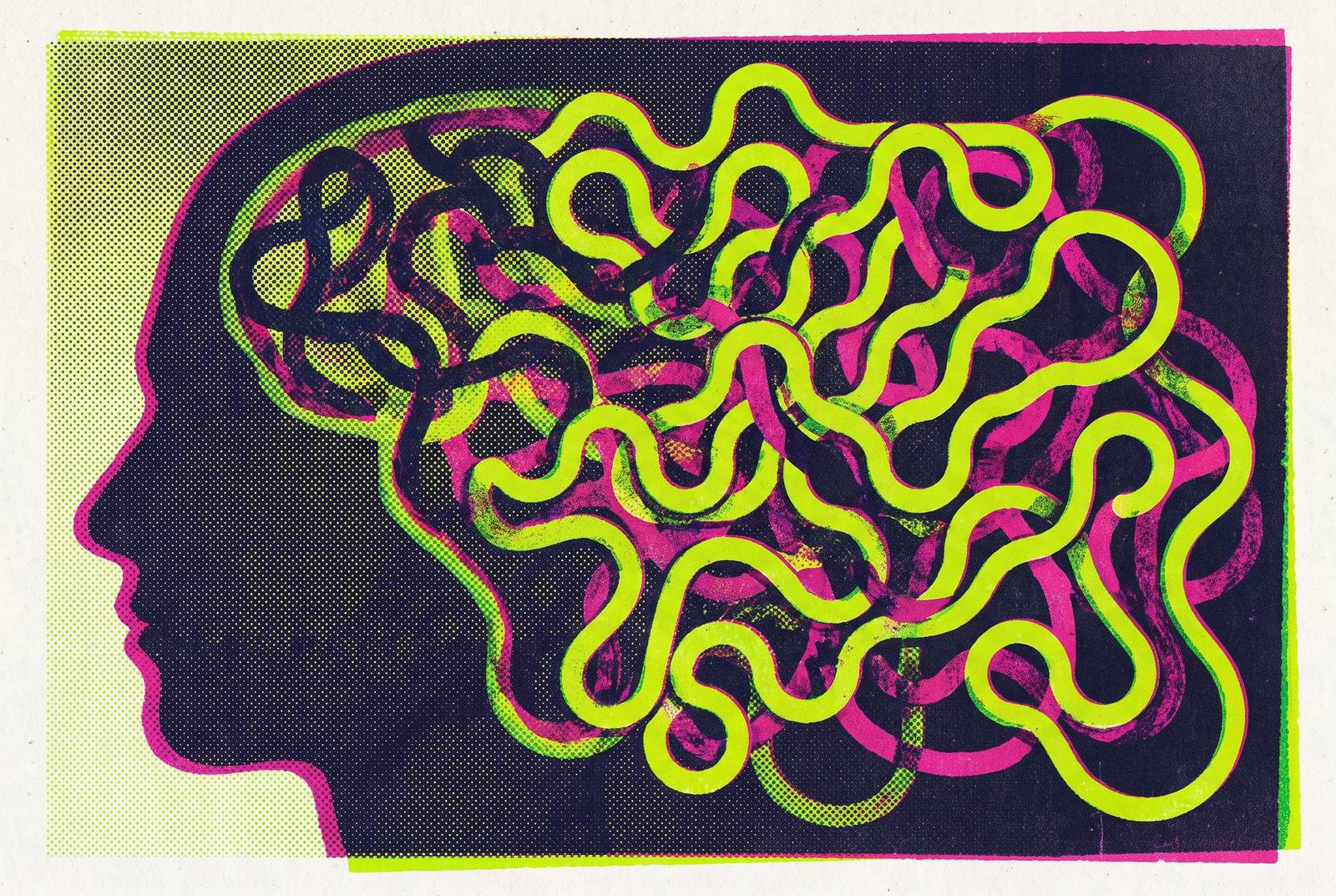
Communication anxiety is not a fixed trait. It is a conditioned neural pattern, and neuroplasticity means the brain that learned it can also unlearn it. This piece explains the mechanism, then the practice structure that uses it.
Communication anxiety is a learned neural pattern, not a fixed personality trait
The anxious communicator's brain is doing exactly what it was trained to do. Dr. Jessica Moe describes it as a brain conditioned to scan for danger and jump to worst-case scenarios. This is not irrationality. It is a learned pattern.
The amygdala, the brain's threat-detection center, has been conditioned through repeated experience to fire in social speaking situations as though they were genuinely dangerous. The result is racing thoughts, physical tension, and a strong urge to avoid. None of this indicates weakness. It indicates that a neural pathway has been reinforced, probably hundreds of times, often without the person noticing the reinforcement happening.
This distinction matters more than most people realize. A personality trait implies something stable, inherent, resistant to change. A learned pattern implies the opposite: a history of conditioning, and therefore the possibility of reconditioning. The amygdala became oversensitive through repeated activation. Think of a smoke alarm that goes off when you toast bread. The alarm is not broken in any permanent sense. It has simply learned a false association, and associations can be updated.
The hopeful core of neuroplasticity is precisely this: the brain that learned anxiety through repeated negative experience can learn calm through repeated positive experience. The direction of change is not predetermined. What was conditioned in one direction can be conditioned in another, provided the right conditions are met. But this also means the wrong conditions will keep deepening the problem. And the most common wrong condition is avoidance.
Why avoidance is the worst thing an anxious communicator can do for their brain
When an anxious communicator avoids a speaking situation, the brain interprets the relief as a reward. Avoidance is not neutral relief. It is practice at being afraid.
Every time the person dodges the presentation, the difficult phone call, the high-stakes conversation, the amygdala's threat pathway gets faster and more efficient. The neural circuit that says "this situation is dangerous" receives another round of strengthening. Meanwhile the prefrontal cortex, the brain's rational and regulatory system, gets less practice at overriding that alarm. The structural consequence is lopsided development: the threat response grows stronger while the regulation system stagnates.
Peachey Counselling illustrates this with a teacher named Sarah. Repeated triggering had made her neural pathways for detecting social threat into what she called superhighways: fast, efficient, and overused. The metaphor is precise. A superhighway does not become a superhighway because it is the only road. It becomes one because traffic keeps using it, and each use makes the next use easier.
This is the core paradox of communication anxiety. The less you speak, the harder speaking becomes. It feels counterintuitive because avoidance does provide relief in the moment, and that relief feels like evidence that avoiding was the right decision. But the brain's learning system does not distinguish between good relief and bad relief. It simply records: avoiding this thing made the distress stop. Do that again.
The self-sealing nature of this loop is what makes it so dangerous. Avoidance relieves anxiety temporarily while strengthening the circuitry that produces anxiety permanently. Each cycle makes the next speaking situation feel more threatening, which makes avoidance more likely, which strengthens the loop further. The person is not standing still. They are actively training their brain in the wrong direction.
How exposure and repetition actually recalibrate the threat response
Repeated, intentional exposure to speaking situations does not merely build tolerance. It physically rewires the brain's threat-response circuitry at the level of individual neural connections. The process is called extinction learning, and it operates differently from what most people assume.
The brain is not "getting used to" the fear in some vague psychological sense. It is forming a new, competing association: this situation is not actually dangerous. That new association progressively overrides the old one. The old pathway does not necessarily vanish. It becomes less dominant, less automatic, less able to hijack the system.
Sarah's case demonstrates the mechanism in concrete terms. Consistent practice redirecting her attention and calming her body weakened the neural pathways connecting her amygdala to panic. Simultaneously, new pathways linking her prefrontal cortex to calming responses grew stronger. The endpoint was not a fearless person. It was a brain whose fear center noticed social settings but no longer commandeered the entire system.
The prefrontal cortex is the key counterweight in this process. Research on cognitive reappraisal shows that effective emotion regulation corresponds to increased activation in the prefrontal cortex and decreased amygdala reactivity. Reappraisal, reinterpreting the meaning of a situation, is effortful at first but becomes less effortful with practice. This is exactly what neuroplasticity predicts: repeated activation of a pathway makes that pathway more efficient.
The University of Michigan is running a neurofeedback study built directly on this mechanism. The study, NCT06132659 under principal investigator Stefanie Russman Block, PhD, trains adults with anxiety to increase prefrontal cortex activity during cognitive reappraisal. The hypothesis is that greater PFC activation correlates directly with greater ability to regulate anxious emotion. The study also tracks prefrontal-amygdala functional connectivity as a secondary outcome, measuring not just regional activation but the communication between the two circuits.
Even pharmacology points the same direction. D-cycloserine works, when it works, by enhancing NMDA receptor function to promote experience-dependent neuroplasticity, accelerating extinction learning. But the drug does not replace learning. The learning still requires the experience, the exposure, the repetition. A pill cannot rewire a pathway that is never activated.
Calming techniques accelerate the process. Peachey Counselling notes that viewing pleasant and peaceful images, progressive muscle relaxation, and redirecting attention to something that requires focus can all lower amygdala reactivity. These are not coping tricks. They are neuroplasticity tools, techniques that lower the threat signal during exposure so the new association can form more effectively.
Why the feedback loop is what separates practice that rewires from practice that just kills time
Not all repetition is created equal. Speaking without feedback builds habit, but speaking with specific, immediate feedback creates the conditions for the brain to update its patterns. This distinction is where most communication training falls short.
The cognitive reappraisal literature confirms the point. The University of Michigan study protocol cites prior research showing that with practice, cognitive reappraisal becomes less effortful and more effective, and that gains in CR use mediate CBT response in anxiety. Structured practice, with clear feedback on performance, is what drives those gains. Unstructured repetition without feedback does not give the brain the error signals it needs to recalibrate.
What does this mean for communication training in practical terms? Focus on one specific skill at a time. Vocal variety. Eliminating filler words. Pacing. Trying to fix everything at once produces a muddled signal. The brain needs a clear, specific target to form a clear new pathway. The Presentation Training Institute notes that consistent, deliberate practice typically shows measurable improvement in vocal variety and gesture use within the first three presentations after training.
Three presentations. That is remarkably fast, but only when the practice is deliberate. Deliberate practice means a defined skill, immediate feedback on that skill, and adjustment based on the feedback. It is the difference between playing scales with a metronome and noodling on a guitar for an hour. One builds neural architecture. The other passes time.
The feedback loop matters because the brain updates based on prediction error. When the anxious communicator expects catastrophe and survives, the prediction error is the raw material of extinction learning. But that error must be made salient. Feedback makes it salient. A score, a recording, a specific observation from a coach: these turn an amorphous experience into a data point the brain can use.
The daily practice structure that gives the brain enough repetition to actually change
Neuroplasticity operates on the logic of frequency. Neural pathways strengthen through repeated activation, which means a little practice every day outperforms a lot of practice once in a while. This is not motivational rhetoric. It is how synaptic consolidation works.
The "use it or lose it" principle cuts both ways. The amygdala's fear pathway weakens when it is repeatedly not activated in a situation the brain once marked as dangerous. But weakening requires consistent, regular exposure, not occasional heroic attempts. A single high-stakes presentation every six months does not provide enough extinction trials to shift the balance. Daily low-stakes speaking does.
The University of Michigan study tracks outcomes across a training arc rather than a single session. This design choice reflects the researchers' understanding that the brain's plasticity response to cognitive reappraisal training accumulates over repeated exposures. One session shows a signal. A training arc shows a change.
Short, focused repetitions lower the threat threshold in a way that long, infrequent sessions cannot. Each successful brief speaking moment teaches the amygdala that speaking is survivable, chipping away at the fear association one repetition at a time. The structure that works mirrors athletic training: a daily prompt, a recorded response, a score. Not a weekend workshop. Not an annual review.
A single scored daily prompt creates the feedback loop that deliberate practice requires. The score is specific. The repetition is daily. The skill improves incrementally. Recording and scoring your own verbal responses makes visible what is otherwise invisible: the filler words, dropped endings, and pacing patterns that the brain has been running on autopilot. A 0 to 100 score turns an abstract skill into a measurable variable. That is what separates training from talking.
What the brain looks like on the other side of consistent verbal practice
Consistent verbal practice does more than reduce anxiety. It builds a measurably different brain, one where confident communication becomes the default pathway rather than the effortful override. The structural shift is real and observable.
When the prefrontal cortex pathway is well-trained, it no longer has to fight the amygdala in the moment. The regulatory response becomes automatic, the way any practiced skill does. Nobody thinks about balance when riding a bicycle after years of riding. The pathway has consolidated. Sarah's outcome in the Peachey Counselling case is the model: she still felt a flutter of nerves, but the amygdala no longer hijacked her system. Response, not reaction.
Verbal fluency itself has compounding returns. The brain that practices speaking daily becomes more fluent, and fluency is not merely social polish. It is cognitive infrastructure. Delivery matters as much as content, and performers have always understood that projection, pacing, and tone are the difference between a message that lands and one that does not. These are trainable, not innate. Deliberate pacing, clear articulation, and strategic pauses make a speaker appear more confident and authoritative. Over time, the brain internalizes these patterns as its natural mode.
The through-line of the entire argument lands here. Anxiety is not who you are. It is what your brain learned. And the brain that learned anxiety can learn confidence, one deliberate repetition at a time.
Sources
- Healing the Anxious Brain with Therapy and Neuroplasticity
- Neurofeedback Enhanced Cognitive Reappraisal Training
- Editorial: Neuroplasticity in cognitive and psychological mechanisms of anxiety
- Repetition of verbal fluency task attenuates the hemodynamic activation in the left prefrontal cortex: Enhancing the clinical usefulness of near-infrared spectroscopy
- Impact of Verbal Repetition and Imitation on Functional and Structural Networks Underpinning Language Learning and Rehabilitation